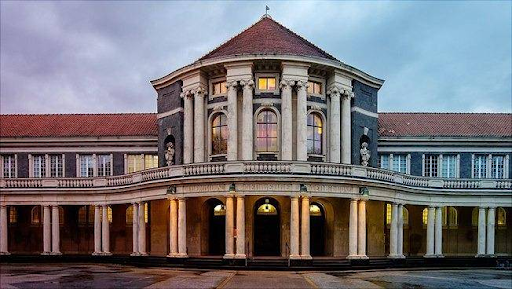
Ludwig-Maximilians-Universität München

Master in Evolution, Ecology and Systematics (Master of Science)

Munich, Germany Taught in English Open to international students

Introduction

Ludwig Maximilian University of Munich (LMU) is a historic public research university founded in 1472 and situated in Munich. With more than 52,000 students including about 9,300 international students, LMU combines a centuries-long scholarly tradition with a vibrant modern campus life. The university is widely recognized across Europe for academic excellence and rigorous research, and its presence in Munich gives students direct access to cultural institutions, technology centers, and an active student community.

LMU supports a broad academic portfolio across the humanities, social sciences, natural sciences, medicine and law, and hosts distinguished faculty and researchers. Its campuses and facilities are designed for collaboration, offering advanced laboratories, specialized centers and extensive library resources. Strong institutional links with organizations such as the Technische Universitaet Muenchen, the Max Planck Society and Fraunhofer institutes create opportunities for joint research, internships and industry collaborations that enrich study pathways and employability.

Student life at LMU blends demanding academics with cultural and professional development. University services, student associations and international offices help newcomers adapt and find peer networks. Living in Munich adds access to museums, festivals, start ups and multinational firms that complement classroom learning. Prospective international students should expect an intellectually challenging environment that opens doors to research, professional networks and long term career development.

About the Program

The Master of Science in Evolution, Ecology and Systematics (EES) is a four-semester research-oriented programme covering a broad range of topics in biology and earth sciences. Advanced courses are offered in population biology, genetics, phylogenetics, population genetics, behavioural ecology, theoretical biology, molecular evolution, human evolution, botany, zoology, limnology, marine biology, and bioinformatics. Students also develop transferable skills in scientific writing, grant writing, presentations, statistical analysis, and conference participation. The curriculum is built around topic-related modules that include lectures, seminars, and practical courses, with teaching kept as closely tied to active research projects as possible. Students carry out multiple individual research projects across the first three semesters, each accompanied by a corresponding skills course. The fourth semester is dedicated entirely to the Master's thesis, a 24-week period of independent research that concludes with a written thesis and oral defence. The programme is a collaboration between the Faculties of Biology and Geosciences at LMU Munich, the Max Planck Institute for Biological Intelligence, and the Bavarian Natural History Collections. The EES programme begins in the winter semester and is based at LMU Munich in München, Germany, at the university's Biocenter on the HighTechCampus.

Similar Programs You Can Apply To

Direct application via Global Admissions is not available for this program. Browse similar partner programs below or visit the university's site to apply directly.

Edit Program

Related Blog Posts

Show More Blog Posts →

Complete your profile to unlock

Direct application links unlock once your profile is at least 80% complete. You're currently at 0%. It only takes a minute.