Economics and Management for Arts, Culture and Communication
Bocconi University
Milan, ItalyEnglish
Next Start Date
Aug 2027
Duration
3 years
Tuition
16,500 EUR per year
Milan, Italy
Bocconi sits outside the overall QS, Times Higher Education and Shanghai world rankings entirely, and the university's own explanation is that those tables score broad, multi-field universities, while Bocconi teaches only economics, management, law, data science and political science. Judged subject by subject instead, it lands 9th worldwide in Marketing, 10th in Business and Management and 12th in Social Sciences and Management in the QS World University Rankings by Subject 2026.
Bocconi is a specialist, not a comprehensive university, and that shapes who should apply. Its 15,000 students and 3,700 international students from 124 nationalities are concentrated entirely in economics, management, finance, law, political science, data science and artificial intelligence, so a prospective applicant is choosing a field as much as a school. The bachelor and law admission formula rewards a strong test score and school transcript specifically, because recommendation letters, motivation essays and CVs are not scored at all for those programmes.
Apply here if you want a single-discipline business, law or social-science degree taught in English inside a large European financial capital, and if you are comfortable being judged on a standardised test and your GPA rather than a broader application file. The trade-off runs in the other direction too: fields outside Bocconi's economics-management-law-data core simply are not on offer, so a candidate weighing a wider range of majors is better served looking elsewhere.
27
Programs
5 phd, 13 master, 9 bachelor
USD 16,457
Avg. Tuition / Year
| Document | Bachelor/Law | Master (MSc/MA) | PhD |
|---|---|---|---|
| ID or passport (extra-EU: passport required) | Required | Required | Required |
| Parent ID/passport if underage | Required | Not required | Not required |
| Secondary-school transcripts / GPA | Required | Not required | Not required |
| Undergraduate transcript / GPA conversion | Not required | Required | Required |
| Test score (Bocconi test/SAT/ACT/LSAT, or GMAT/GRE) | Required | Required (not for PPA, GLOBE) | Sometimes (not for Legal Studies) |
| English dossier / motivation statement | Not required | Required | Required (statement of purpose) |
| Video presentation | Not required | Sometimes (compulsory for IM CEMS, IM Asia, IM Concentrations, GLOBE MA) | Not required |
| Final diploma (by end of July, or August for UK qualifications) | Required | Not required | Not required |
| CIMEA Statement of Comparability / Declaration of Value | Sometimes (non-EU citizens) | Not required | Not required |
| CV, passport photo, reference letters (up to two) | Not required | Not required | Sometimes (CV and photo required; references optional) |
| Intake | Opens | Deadline | Notification | Semester starts |
|---|---|---|---|---|
| Bachelor/Law: Early Session | 2 Sep 2026 | 29 Sep 2026, 3:00pm Italy time | Mid-November 2026 | Sep 2027 |
| Bachelor/Law: Winter Session | 25 Nov 2026 | 26 Jan 2027, 3:00pm Italy time | Mid-March 2027 | Sep 2027 |
| MSc/MA: Round I | 1 Oct 2026 | 29 Oct 2026 | 17 Dec 2026 | Sep 2027 |
| MSc/MA: Round II | 30 Oct 2026 | 26 Jan 2027 | 4 Mar 2027 | Sep 2027 |
| MSc/MA: Round III | 27 Jan 2027 | 11 Mar 2027 | 13 Apr 2027 | Sep 2027 |
| MSc/MA: Round IV | 12 Mar 2027 | 29 Apr 2027 | 10 Jun 2027 | Sep 2027 |
Bocconi's published rounds apply to international candidates by level, not by citizenship. There is a single bachelor/law calendar and a single MSc/MA calendar, rather than separate EU and non-EU tracks. PhD admission runs on its own annual call outside these rounds; the most recent Statistics and Computer Science FIS call opened 17 April 2026 and closed 18 May 2026, with results by 8 June 2026, so a prospective PhD applicant should watch the PhD admissions page directly for the next call rather than the bachelor/master calendar above.
For bachelor and law programmes, Bocconi is explicit that the admission ranking is built from two inputs only: 55% selection-test score and 45% GPA from the third-last and second-last school years. Recommendation letters, motivation letters and CVs play no part in the score. That means test preparation and transcript accuracy are the entire game; a polished personal statement changes nothing in this pipeline.
The Bocconi online test used for most MSc/MA applications is 50 multiple-choice questions in 75 minutes, split into 24 verbal-reasoning, 16 data-insight and 10 quantitative-reasoning questions, and any score below 15 out of 50 is not considered by the admissions committee. Each attempt costs EUR 60 and a candidate can sit it up to three times in an academic year, so a low first score is recoverable within the same cycle rather than fatal.
Bocconi tells bachelor/law applicants directly that earlier submission can improve chances of admission, of scholarship allocation and of clearing non-EU visa steps in time, which argues for the Early Session over the Winter Session wherever a candidate's test score and transcripts are ready. For MSc/MA candidates, the English dossier and motivation statement are compulsory evaluation elements alongside the test and transcript, and skipping any one of the three compulsory elements means the file is not evaluated at all. Unlike the bachelor route, extra material here is part of the required file, not an optional extra.
For PhD applicants, the most detailed published scoring, from the Statistics and Computer Science FIS call, allocates up to 50 points to CV and academic record, 10 to GMAT/GRE, and 40 to the statement of purpose and reference letters, with 60 points out of 100 needed to clear the bar; GMAT/GRE carries no weight at all for the PhD in Legal Studies. Non-EU candidates admitted to a PhD should also start the Universitaly visa process early: Bocconi advised the 2026/27 PhD intake to submit by 3 July 2026 specifically to clear the application before August embassy closures, a timing pattern worth building into any non-EU application regardless of level.
Before you submit
Get your Bocconi University application checked by an advisor
One missed document can cost you a whole intake. Spend 30 minutes with an advisor who has taken students through this exact application, and leave knowing what to submit, and what has to happen before 16 January 2027.
30 minutes · one-to-one
| Level | Annual tuition & fees (a.y. 2026/27) | Waiver floor available |
|---|---|---|
| Bachelor of Science / Law (1st year) | EUR 17,000 | Down to EUR 3,400 at an 80% Bocconi4Access waiver (also 20%/40%/60% bands at EUR 13,600 / 10,200 / 6,800) |
| Master of Science / MA (1st year) | EUR 18,550 | Down to EUR 7,280 at a 60% Bocconi4Access grant (20% band at EUR 14,840) |
| PhD (FIS-funded positions) | EUR 190 regional tax only | Fellowship pays EUR 27,000 gross in year 1 and EUR 23,000 gross in years 2–4 |
| Housing (Bocconi residence halls, a.y. 2026/27) | Monthly rate |
|---|---|
| Full-rate single room, shared bathroom | from EUR 770 |
| Full-rate Castiglioni studio apartment | up to EUR 1,050 |
| Preferential ISU-bracket rate (income/merit-tested) | EUR 380–650 |
| Olympic Village double room (11-month contract) | EUR 615 |
| Housing deposit | EUR 600 (2 months' rent for Olympic Village) |
Last verified 20 July 2026, from Bocconi's official fees page and 2026/27 housing fee schedule.
The EUR 17,000–18,550 tuition band excludes ancillary costs: a graduation fee of EUR 215 for Bachelor of Science programmes and EUR 365 for Integrated Master of Arts and Master of Science programmes, plus any special-programme participation charges and certificate fees. First-year students pay in instalments: an enrolment-linked advance, then adjustments on 15 October 2026, 29 January 2027 and 30 April 2027, through Flywire or PagoPA. A missed instalment (other than the first) triggers a EUR 100 late fee per occurrence, and non-payment of the first-year advance itself cancels the enrolment outright.
Housing runs on its own separate schedule: the standard residence-hall assignment period is 20 August 2026 to 27 June 2027, with a EUR 600 housing deposit due 30 July 2026 and further instalments on 19 December 2026 and 10 March 2027. The Olympic Village double room sits outside that cycle, running 24 August 2026 to 23 July 2027 for EUR 615 a month against a two-month-rent security deposit.
Bocconi does not price tuition differently for EU and non-EU citizens: the EUR 17,000/18,550 figures apply by level, and the waiver ladder runs on the same ISEE/ISEEU Parificato-style economic documentation used for ISU right-to-study benefits and preferential housing, rather than on passport. That documentation-based approach means a non-EU student's actual cost of attendance can land well below the headline tuition figure if their family's income and assets clear the relevant threshold, in exactly the same way it does for an Italian applicant.
| Scheme | Who it's for | Amount | Timing |
|---|---|---|---|
| Bocconi4Access (bachelor/law) | Need-based, single application for 2027/28 entry | 20%, 40%, 60%, 80% or 100% tuition waiver | Allocated until the year's budget is exhausted |
| Bocconi4Access / merit awards (MSc/MA) | International master's applicants, merit- and need-based | Tuition waivers up to 60% of the annual fee | Assessed with roughly 300 benefits available across need-based, merit-based and other exemptions for 2026/27 |
| ISU Bocconi (Lombardy right-to-study) | Students within ISEE/ISEEU Parificato ≤ EUR 26,887.93 and ISPE/ISPEEU Parificato ≤ EUR 58,452.06 (2025/26 thresholds) | Full tuition, fee and regional-tax exemption, a cash stipend, a daily meal valued at EUR 829, preferential canteen access and the 200-hour work-study programme | Provisional ranking mid-October 2026, final ranking end of October 2026 |
| PhD FIS fellowship (Statistics and Computer Science) | Admitted FIS-call PhD candidates | EUR 27,000 gross in year 1, EUR 23,000 gross in years 2–4, plus a EUR 1,650/year research budget | Awarded with the FIS admission decision |
Alongside these, Bocconi runs a Women Award, a disability waiver for students with a recognised disability of 66% or greater, a partial waiver for simultaneously enrolled siblings, a Bocconi Sport Scholarship, and access to student loans including US Direct Loans, at both bachelor and master level. The largest single lever for an international applicant is usually ISU: because it is assessed on household income and assets rather than citizenship, a non-EU student can qualify for the same full exemption, stipend and meal benefit as an EU one if their documented economic situation clears the threshold.
| Level | Programmes | Language |
|---|---|---|
| Bachelor | 9 | English |
| Master | 13 | English |
| PhD | 5 | English |
Every one of the 27 programmes in our catalogue is taught in English. They cluster around Management (8 programmes), Finance (3), Business, Economics and Law (2 each), and Artificial Intelligence (2), with single programmes in computer science, international politics, cybersecurity, data science and analytics, policy analysis, sustainability, public policy and statistics. Bocconi's own programmes directory lists 24 degree offerings organised around Economics, Management, Finance, Political Science, Data Science, Artificial Intelligence and Legal Studies, which is the same territory under the university's current naming.
Flagship master's programmes include Finance and International Management, both tracked separately below for employment outcomes, plus Data Science and Business Analytics. At bachelor level, Global Law is the Law School's flagship English-taught degree, distinct from the Undergraduate School's Management, Economics and Finance-facing programmes. At doctoral level, the Statistics and Computer Science PhD was the subject of Bocconi's most recently published FIS funding call.
For 2027/28, the Undergraduate School and Law School together plan for roughly 2,645 Undergraduate School seats, 320 Law School seats, 45 seats on the World Bachelor in Business, and 110 seats on the HEC-Bocconi double degree. At master's level, 31 first-year class groups run across the MSc/MA portfolio, most sized at 75 seats, with smaller cohorts in Transformative Sustainability, Cyber Risk Strategy and Governance, and the GLOBE MA.
Bocconi University
Bocconi University
Bocconi University
Bocconi University
Bocconi University
Bocconi University
Bocconi University
Bocconi University
Bocconi University
Bocconi University
Bocconi University
Bocconi University
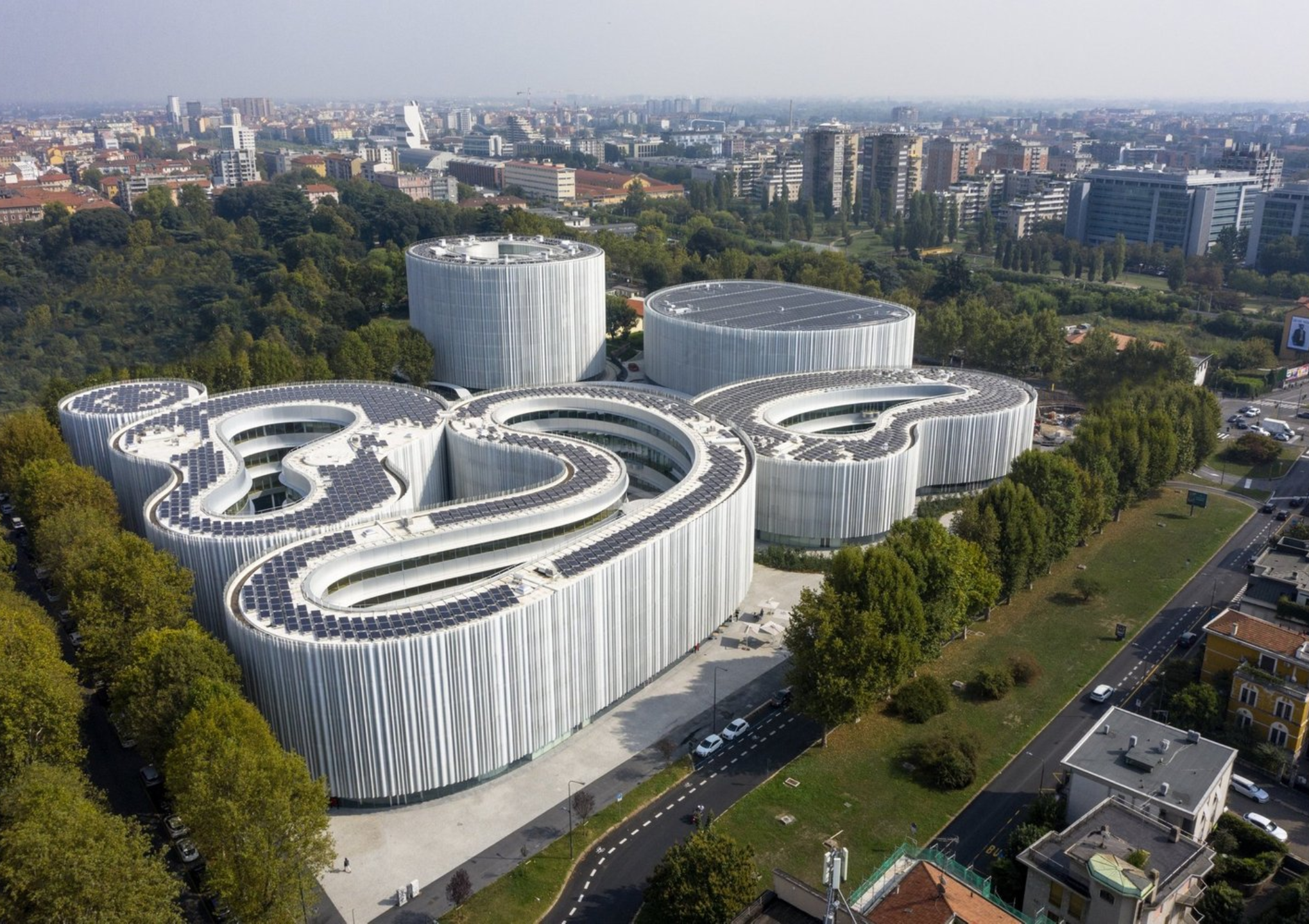
Bocconi's 15,000-student community includes 3,700 international students from 124 nationalities, spread across a 350,000 sqm campus in central Milan that includes 7 residence halls and a 17,000 sqm sport center. All seven residences sit within a 10–15 minute walk of classrooms and offer single bedrooms with a private bathroom or one shared with a single other resident, plus shared kitchen access, a step up from the multi-bed dormitory rooms common at other European universities.
Full-rate residence rooms are reserved for students classed as non-resident, meaning their public-transport commute to Bocconi exceeds 90 minutes, except during Open reservation sessions, when anyone can apply regardless of commute distance. Preferential rates instead depend on meeting ISU/right-to-study economic and merit tests, with three fee bands tied to the ISEE/ISEEU and ISPE/ISPEEU Parificato brackets described in the funding section above; an international student assessed under those same thresholds pays the same reduced rate as an Italian one. Guests are allowed into residences between 7:00am and midnight, but resident students themselves face no entry or exit time restriction at any hour.
Bocconi runs a structured Welcome programme for new international students arriving in August 2026, including YesMilano relocation workshops covering the practical side of settling into Milan, a travel-in-Italy orientation session for students planning to explore the country during their studies, and an Italian-gestures cultural event introducing the non-verbal side of Italian communication. For a cohort where 3,700 students are, by definition, arriving from outside Italy, this kind of structured onboarding in the first weeks matters as much as the academic calendar itself.
Across Bocconi's master's programmes, 94.5% of graduates are employed one year after graduation, and 36.2% of them are working abroad. The pattern holds at programme level: Finance MSc English class groups report 93% employed one year out (63.9% of those abroad) among the 2021/22 graduating cohort, and on graduation day itself 82.2% were already employed, with an average of 5.9 job interviews and 2.1 offers per graduate in the 2022/23 sessions. International Management MSc reports an even higher 95.7% employed one year out (60.3% abroad) for 2021/22 graduates, with 82.7% employed on graduation day and averages of 5.6 interviews and 1.9 offers in 2022/23. Both programmes converge on roughly the same one-year outcome despite different graduation-day starting points.
Bocconi's Career Services ran 16 career fairs in Italy and abroad in 2025, brought 700+ employers to those fairs and 740+ into direct meetings with students and graduates, and posted more than 9,300 internship and job opportunities through its JobGate portal over the same year. Beyond the fairs and postings, Career Services also runs individual career guidance and supports internship activation and academic credit recognition, so an internship secured through the office can count toward a degree rather than sitting outside it.
The employer network named on Bocconi's own pages includes Goldman Sachs, McKinsey, Bain, BCG, J.P. Morgan, UniCredit, Amazon, LVMH, A&O Shearman and Clifford Chance, a mix weighted toward finance, consulting and law that matches the degree portfolio itself. For an applicant choosing between Finance and International Management specifically, the graduation-day gap (82.2% versus 82.7% employed) is negligible, but Finance's slightly higher share working abroad one year out (63.9% versus 60.3%) is the more useful signal if an international career is the actual goal.
EU students no longer need a residence permit to study in Italy, but anyone staying more than 90 days must register with the Registry Office of their municipality of residence within three months of arrival.
Non-EU students need a Type D student visa before travelling, obtained by starting pre-enrolment on the Universitaly portal (selecting International Students, then Pre-enroll Now); Bocconi's international office then uploads the official admission letter that the applicant's embassy or consulate uses to process the visa itself. For the 2026/27 PhD intake, Bocconi advised non-EU admits to submit Universitaly by 3 July 2026 specifically so the file could clear before the August embassy closures, a deadline pattern that applies to any non-EU applicant working against a September start.
After entering Italy, non-EU students must apply for a study residence permit within 8 working days of arrival, through a postal kit that carries a EUR 30 application fee, a EUR 16 revenue stamp, and a EUR 70.46 electronic-permit payment. The required file includes the admission/enrolment certificate, copies of the passport and visa pages, health insurance, and proof of roughly EUR 7,000 a year in financial resources (a bank statement or fellowship letter), plus proof of accommodation. A non-EU student who already holds a residence permit from another Schengen country covering the full Italian stay skips the Italian permit, but must still file a declaration of presence within 8 working days of arrival.
Browse programs, compare universities, and start your application.
Applying to Bocconi University?
Get your application reviewed 1:1
We use cookies to improve your experience and analyze traffic. Read our Cookie Policy.