

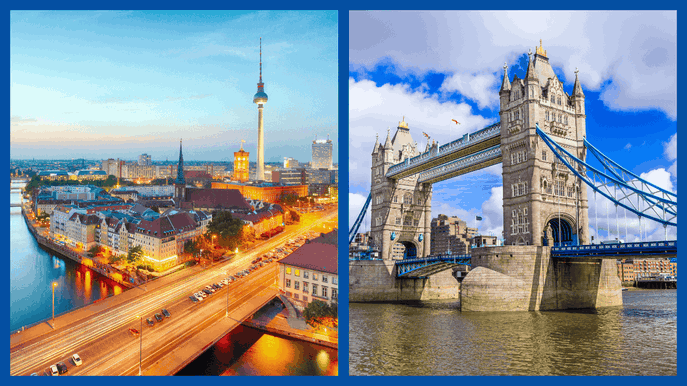
When international students ask us "Where should I study for my Master's degree?", they're really asking a deeper question: "What kind of investment am I willing to make in my future?"
In 2026, the choice between the United Kingdom and Germany represents more than a geographical decision.
The UK offers the "Premium Express" model: pay more, finish faster, leverage world-renowned institutional prestige, and enter the workforce 12-18 months ahead of your peers.
Germany presents the "Value Marathon" approach: minimal tuition costs, longer program duration, and a robust industrial economy particularly welcoming to STEM graduates.
Neither destination is objectively "better." Your optimal choice depends on your financial capacity, career timeline, field of study, and long-term goals. This analysis provides the data you need to make an informed decision.
Breakdown of Costs
Tuition Fees
United Kingdom (2026 Master's Programs)
- Range: £15,000 - £25,000 per year for most programs
- Premium programs (MBA, data science, engineering at top universities): £25,000 - £32,000+
- Duration: Typically 1 year (12 months)
- Total tuition: £15,000 - £25,000 for standard programs
Germany (2026 Master's Programs)
- Public universities: €0 tuition (semester fees only: €100-€400 per semester)
- Exceptions:
- Baden-Württemberg universities: €1,500 per semester for non-EU students
- Bavaria (TUM only): Similar fees for non-EU students
- Private universities: €5,000-€20,000 per year
- Duration: 1.5 - 2 years (18-24 months)
- Total tuition (public universities): €200-€800 for entire program
Monthly Budget Comparison
Expense Category | UK (Outside London) | UK (London) | Germany (Major Cities) | Germany (Smaller Cities) |
|---|---|---|---|---|
Accommodation | £500-£800 | £800-£1,200 | €400-€600 | €300-€500 |
Food & Groceries | £200-£300 | £250-£400 | €200-€250 | €180-€220 |
Transportation | £50-£100 | £150-£200 | Included in semester fee | Included in semester fee |
Utilities & Misc | £100-£150 | £150-£200 | €100-€150 | €80-€120 |
Total Monthly | £900-£1,300 | £1,300-£1,400 | €700-€1,000 | €600-€900 |
Visa and Immigration Costs
UK Student and Post-Study Costs
- Student Visa: £524 (one-time)
- Immigration Health Surcharge (IHS): £1,035 per year
- For 1-year Master's: ~£1,035
- Graduate Route Visa (post-study work):
- Application fee: £880
- IHS for 2 years: £2,070 (if applied before Dec 31, 2026)
- IHS for 18 months: £1,552.50 (if applied after Jan 1, 2027)
- Total Graduate Route cost: £2,950 (2-year) or £2,432.50 (18-month)
Germany Student and Post-Study Costs
- Student Visa: €0 (nationals from 62 countries can enter visa-free and apply in-country)
- Blocked Account Requirement: €11,904 per year (€992/month) - refundable as living expenses
- Opportunity Card (if returning from home country): €75-€100
- No health insurance surcharge (German health insurance: ~€110/month for students)
Total Cost Analysis
UK Master's Degree (1 Year)
- Tuition: £20,000 (average)
- Living costs (12 months): £12,000 (£1,000/month average)
- Student visa + IHS: £1,559
- Graduate Route visa: £2,950
- TOTAL: £36,509 (approx. €43,000 or $47,000)
Germany Master's Degree (2 Years, Public University)
- Tuition: €400 (semester fees)
- Living costs (24 months): €19,200 (€800/month average)
- Visa costs: €0-€100
- Health insurance: €2,640 (€110 x 24 months)
- TOTAL: €22,240 (approx. £18,800 or $24,000)
UK costs approximately €20,760 ($23,000) more than Germany for a Master's degree.
Where Will You Work?
UK Graduate Employment (2026)
Employment Statistics:
- 70-72% of graduates in employment 15 months after graduation
- Average graduate salary: £30,362
- Time to secure job: 5.6 months average
- Competition: 85-140 applications per graduate role (sector dependent)
High-Demand Sectors for International Graduates:
- Technology and IT (software engineering, data science)
- Financial services (London's financial hub)
- Healthcare and pharmaceuticals
- Sustainability and green energy
- Consulting and professional services
Germany Graduate Employment (2026)
Employment Statistics:
- 91.9% employment rate for recent graduates (highest in EU)
- 64-69% of international students intend to stay in Germany after graduation
- 45-46% of international students still in Germany 10 years after starting studies
- Average IT salary: €47,000-€70,000
- Average engineering salary: €55,000-€79,000
High-Demand Sectors for International Graduates:
- Engineering (mechanical, automotive, electrical)
- Information Technology and software development
- Healthcare and medical technology
- Renewable energy and sustainability
- Manufacturing and Industry 4.0
Post-Study Work Pathway:
- 18-month job-seeker visa (Section 20 Residence Act)
- Can work any job during this period
- No restrictions or salary thresholds initially
- EU Blue Card (for skilled employment):
- Minimum salary: €50,700 annually (€45,934.20 for shortage occupations)
- Fast-track to permanent residency (21-27 months)
- Opportunity Card (for those who returned home): €75 visa for 12-month job search
Choose the Right Path for Your Goals
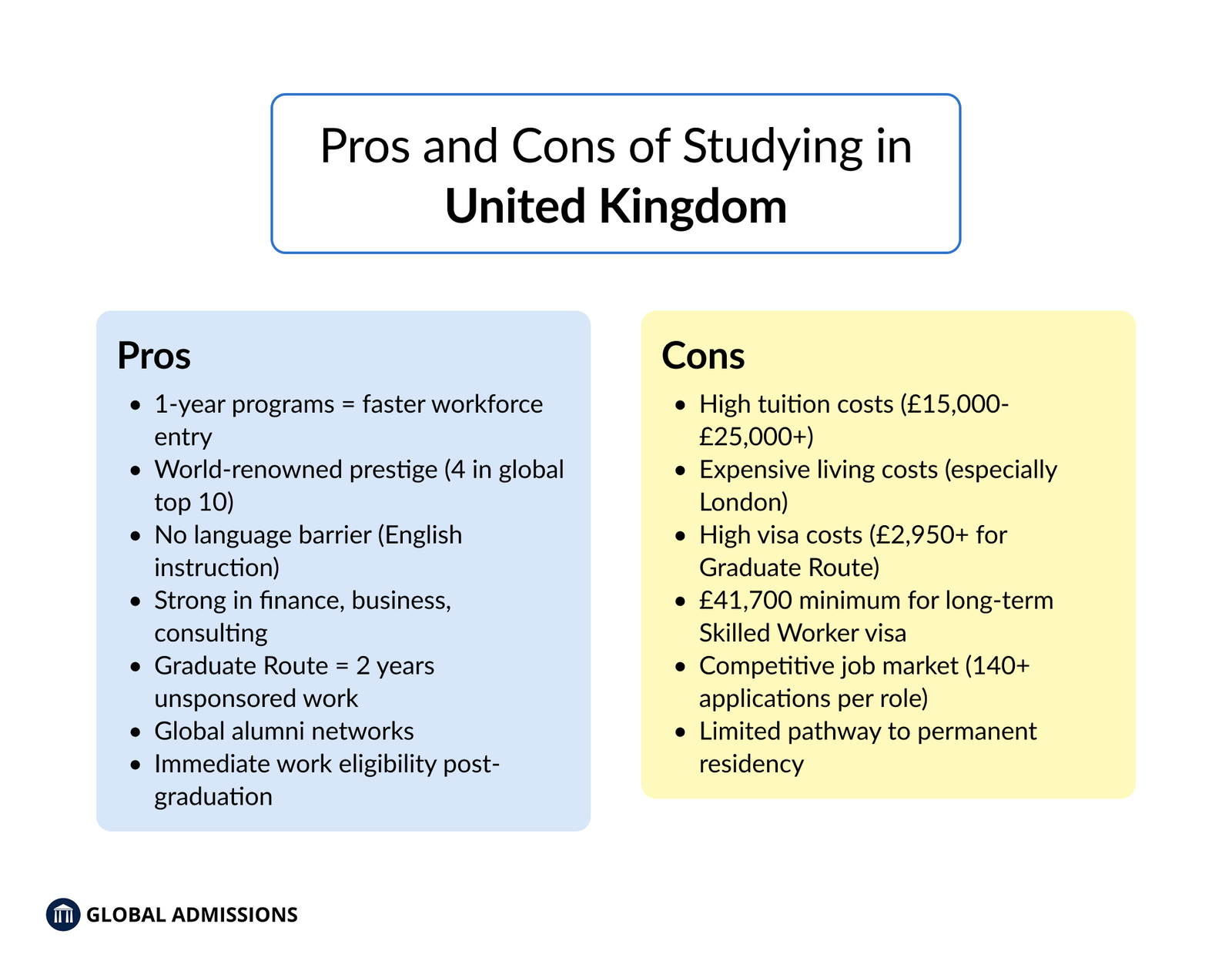
Choose UK if you:
- Can afford the investment (€40,000+ total cost) or have scholarship funding
- Want to enter the workforce immediately (value time over money)
- Are targeting finance, business, consulting, or non-technical fields
- Prefer English-language environment (no language learning required)
- Value brand prestige for global career mobility
- Plan to return home or move to another country (not permanent UK settlement)
- Need immediate income and can't sustain 2 years of study
- Are comfortable with competitive, fast-paced environments
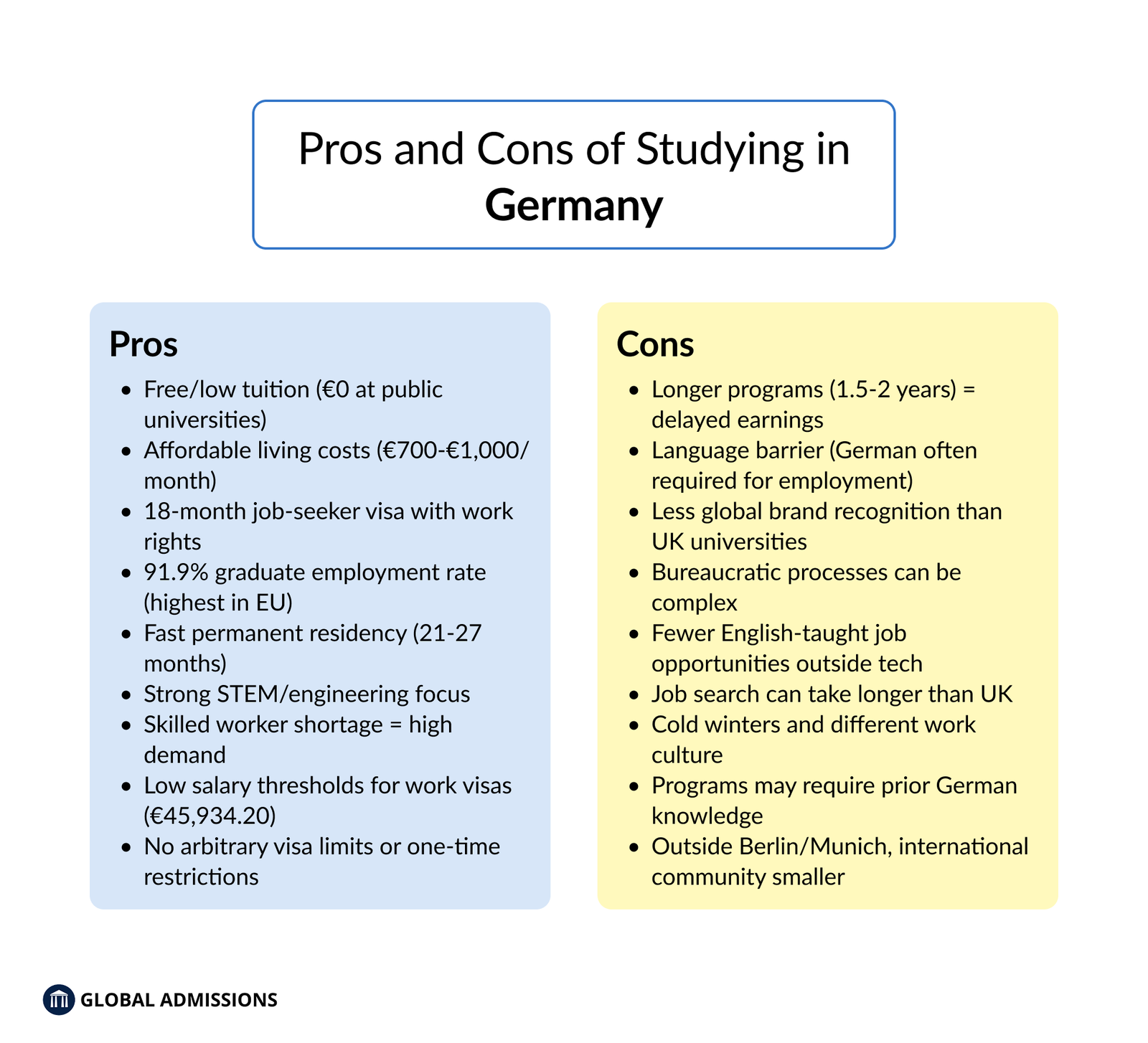
Choose Germany if you:
- Have limited initial capital but can sustain basic living expenses
- Are in STEM fields (engineering, computer science, natural sciences)
- Are willing to learn German (B1-B2 level) for better job prospects
- Want permanent residency in Europe (21-month fast-track available)
- Prefer longer, comprehensive programs with research opportunities
- Can afford to delay earnings by 12 months for lower total cost
- Value work-life balance and social security systems
- Want to work in manufacturing, automotive, engineering, or tech sectors
Compare Your Options on Global Admissions
Are you ready to explore specific programs that match your profile and career goals? Global Admissions offers a free, comprehensive platform where you can browse thousands of programs in the UK, Germany, and 30+ other study destinations
Sources
- QS World University Rankings 2026 and THE Rankings 2026
- UK Government Immigration Statistics (GOV.UK, 2024-2026)
- German Federal Employment Agency and Make it in Germany (2026)
- HESA Graduate Outcomes Survey (2022/23)
- DAAD International Student Survey (2022)
- British Council Study UK
- Academic research from AGCAS, EAIE, and European labor market studies
Disclaimer: Immigration policies, tuition fees, and visa requirements change frequently. Always verify current requirements with official government sources and university admissions offices before making final decisions. This analysis provides general guidance based on 2026 data and may not reflect individual circumstances.
